
Fabric choice is two separate decisions people collapse into one: what the material is, and how much light it lets through. This covers the first. Polyester dominates, PVC blinds and vinyl own the wet and commercial rooms, and natural weaves buy texture at the cost of durability.
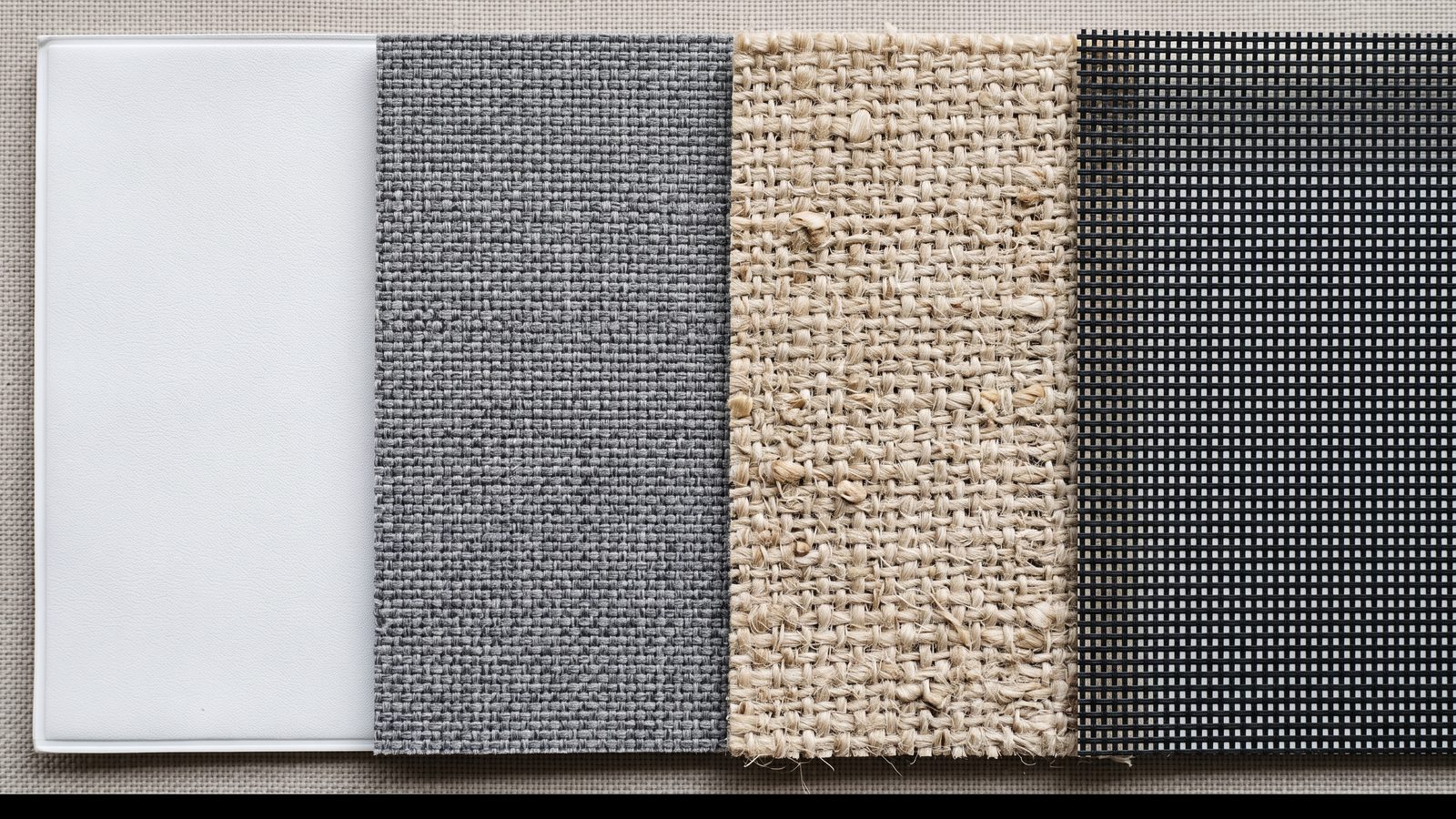
Blind Fabrics, Material by Material
| Material | Feel and look | Wet rooms | Cleaning | Typical use |
|---|---|---|---|---|
| Polyester | Smooth, even, wide colour range | Acceptable | Vacuum, spot clean only | Most roller blinds |
| PVC-coated polyester | Slight sheen, stiffer | Good | Damp wipe | Kitchens, commercial |
| Solid PVC / vinyl | Flat, utilitarian | Excellent | Full wet clean | Clinics, kitchens, wet areas |
| Fibreglass-core sunscreen | Crisp, holds shape | Good | Damp wipe | Offices, shopfronts |
| Metallised-back blockout | Normal face, silver reverse | Acceptable | Vacuum only | West-facing, skylights |
| Natural weave | Textured, irregular | Poor | Dry brush only | Living rooms, studies |
Why Polyester Won
It takes dye consistently, resists stretch, holds a cut edge without fraying, and is dimensionally stable across the temperature swing a Cape Town window sees between 06:00 and 15:00. That last property is why blinds do not go slack in summer.
Coatings Change Everything
The same base cloth becomes a different product depending on what is applied to it. An acrylic foam backing turns a translucent fabric into blockout. A metallised backing adds reflectivity and is the best-performing internal option for heat — see how blinds cut solar gain. A PVC coating makes it wipeable. When a supplier quotes two fabrics at very different prices, the coating is usually the difference.
Sheer and Sheerweave
Sheer fabrics are open weaves that soften light without any real privacy, and are normally paired with a second opaque blind rather than used alone. The openness percentage that describes them is explained in the openness factor guide.
What Fails First
- UV — the main killer. West-facing fabric ages far faster than south-facing, whatever the material.
- Delamination — on coated blockouts, the backing separates and bubbles. Usually a sign of sustained heat plus age.
- Water marking — permanent on most coated fabrics, which is why they are never washed. See how to clean blinds.
- Mould — only on uncoated natural and untreated fabric in humid rooms.
Frequently Asked Questions
Which blind fabric is best for a bathroom?
Solid PVC or a PVC-coated polyester. Both tolerate humidity and can be wiped down, where uncoated fabric holds moisture and grows mould.
Can blind fabric be washed?
No. Immersing or machine washing removes the coating, shrinks the panel and leaves permanent tidemarks. Vacuum and spot clean only.
What is the difference between blockout and dim-out fabric?
The backing. Dim-out is a dense weave that diffuses light; blockout carries an opaque coating that stops it entirely. Same base cloth, different finish.
Get a Free Measure & Quote in Cape Town
Window Blinds Cape Town measures, manufactures and installs across the metro. Call 081 411 8471 for a free on-site measure and quote, or browse the other blind guides.