
Heat control is the reduction of solar gain through glazing, and a blind achieves it by intercepting sunlight before or as it crosses the glass. The fabric’s colour and openness set the result: a light, tight weave at 1% to 3% openness reflects the most heat, while a 10% weave passes far more of it. Blinds cannot stop heat already conducted through the glass, which is why a west-facing window benefits most.
How Heat Actually Enters
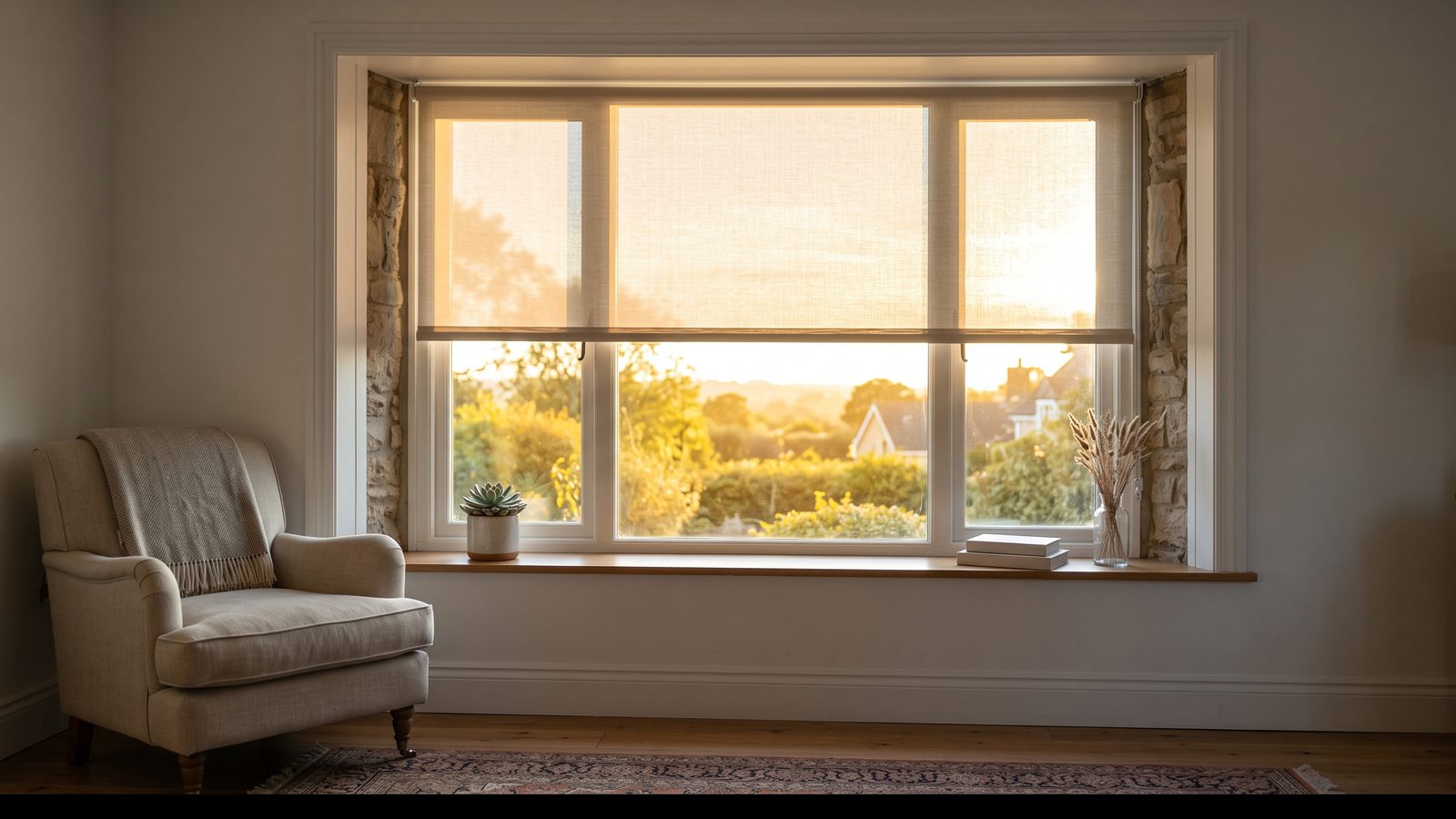
Solar energy passing through glass is absorbed by whatever it lands on and re-radiates as long-wave heat, which the glass then traps. An internal blind intercepts that energy at the window. What it does next depends entirely on the surface facing outward: a reflective pale face turns much of it around and back out; a dark absorbent face soaks it up and re-radiates a share into the room.
| Fabric and colour | Relative solar heat reduction | View retained |
|---|---|---|
| Blockout, pale or metallised backing | Highest | No |
| Blockout, dark both sides | High | No |
| Sunscreen, pale | Moderate to high | Yes |
| Sunscreen, dark | Moderate | Yes, best clarity |
| Aluminium venetian, closed and tilted up | Moderate to high | No when closed |
| Timber venetian, closed | Moderate | No when closed |
How Blinds Keep Heat Out: The Dual-Sided Answer
The obvious tension — dark fabrics look better inside and control glare, pale fabrics perform better on heat — is solved by dual-sided fabric. A white or metallised backing faces the glass and does the reflecting; a charcoal or bronze face looks into the room and gives the crisp view. It costs more per square metre and is usually worth it on west-facing glass.
Tilt Direction Matters on Venetians
A venetian tilted so the slats close upward throws light and heat at the ceiling and back out; tilted downward it channels both into the room and onto the floor. Same blind, same fabric, different result. On aluminium slats, which reflect strongly, the difference through a hot afternoon is easy to feel.
Where the Gains Are Biggest
West and north-west glass takes the longest, lowest, hottest sun of the Cape afternoon and is where a blind earns its keep. Unshaded north glass runs a close second in summer. South-facing glass rarely sees direct sun and gains little thermally, so specify those windows for view and glare instead. Room-by-room specifications are set out under bedroom, kitchen and office blinds.
What Blinds Do Not Do
An internal blind cannot match external shading. By the time energy has passed the glass it is already inside the building envelope, and the blind is managing it rather than preventing it. External shading, low-E glazing and roof overhangs all outperform any internal blind on pure heat rejection. The blind’s advantage is that it is adjustable, retrofittable and a fraction of the cost.
Frequently Asked Questions
Do blackout blinds keep a room cooler?
Yes, and they are usually the best-performing internal option, particularly with a pale or metallised backing that reflects energy back through the glass.
Are light or dark blinds better for heat?
Light blinds are better, on the side facing the window. Pale surfaces reflect solar energy; dark surfaces absorb it and re-radiate part of it inward. A dual-sided fabric lets you have pale outside and dark inside.
Do blinds help in winter too?
Yes, modestly. A closed blind adds a still layer of air at the glass and reduces night-time heat loss. The effect is smaller than the summer benefit but real, and largest on blockout fabrics.
Get a Free Measure & Quote in Cape Town
Window Blinds Cape Town measures, manufactures and installs across the metro. Call 081 411 8471 for a free on-site measure and quote, or see what blinds cost in Cape Town.