
A blind fault is a failure in one of four places: the mechanism, the mounting, the fabric or the cords. Nearly all of them are a component fault, not a whole-blind fault — a repair runs R150 to R600 plus parts, against R450 to R900 per square metre to replace a roller blind. Fabric that telescopes to one side is a tube or bracket alignment fault; a blind that will not hold position is almost always the clutch.
Most of these are an installer call-out, not a new blind: what a blind installer does.
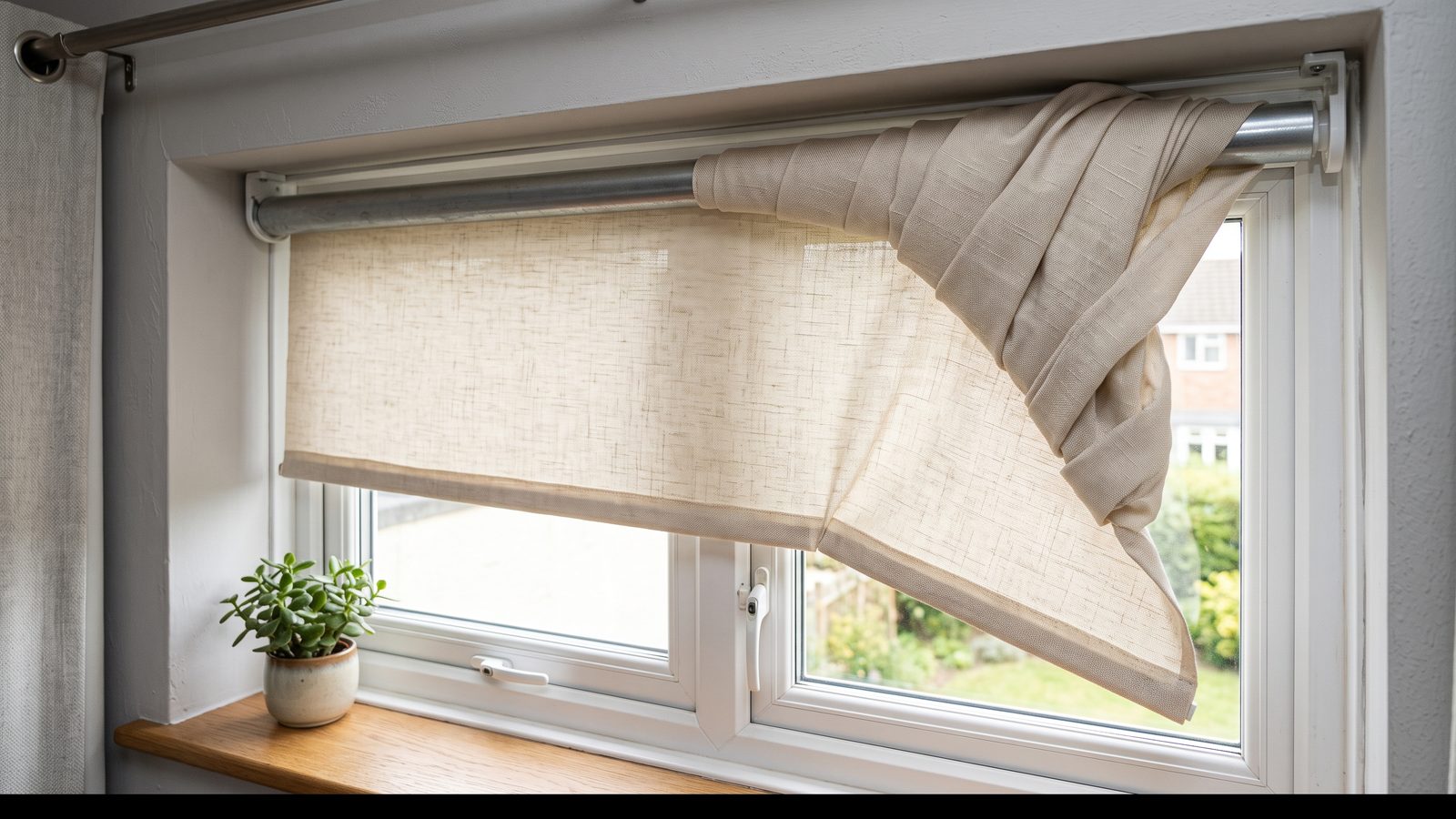
How to Fix Blinds: Symptom and Cause
| Symptom | Likely cause | Verdict |
|---|---|---|
| Roller will not hold, creeps down | Worn clutch | Repair — common and cheap |
| Chain slips or jumps | Worn chain or clutch sprocket | Repair |
| Blind rolls unevenly, fabric tracks sideways | Brackets not level, or tube out of true | Repair — usually a re-level |
| Venetian will not tilt | Tilt mechanism or wand connector | Repair |
| Venetian rises unevenly | Broken lift cord or worn cord lock | Repair — restring |
| Slats slip out or hang loose | Broken cord ladder | Repair — re-tape |
| Vertical louvres fall off | Broken carriers or hangers | Repair — replace carriers |
| Vertical louvres will not rotate | Disconnected tilt rod | Repair |
| Roman folds are uneven | Stretched or broken ring tape | Repair |
| Motor unresponsive | Flat battery, then lost pairing, then motor | Usually just a charge |
| Fabric brittle, faded, tearing | UV degradation | Replace — fabric is done |
| Blockout backing bubbling | Delamination from heat and age | Replace |
| Timber slats bowed | Moisture or sustained heat | Replace |
| Hardware corroded through | Salt air | Replace, and specify rust-resistant |
The Pattern Behind Most Common Blind Problems
To fix venetian blinds specifically, the fault is nearly always the tilt mechanism, the cord ladder or the cord lock — all three are replaceable parts.
Anything driven by a mechanism — clutch, chain, cord, carrier, tilt, motor — is a replaceable part and worth repairing. Anything wrong with the material itself — perished fabric, bowed timber, corroded metal — means the blind has reached the end of its life. That split holds for almost every fault we see: how long blinds last.
Do Not Force It
Most broken clutches spent weeks dragging before they failed. A blind that has become stiff, noisy or reluctant is telling you the mechanism needs attention, and attending to it then is far cheaper than after it seizes. Do not oil a roller clutch — lubricant attracts grit and accelerates the wear.
Crooked Blinds Are an Installation Fault
If a blind has hung askew or tracked sideways since day one, the brackets are not level or not coplanar. That is not a fabric fault and no amount of adjusting the chain will fix it. It is a quick re-level: blind installation.
Frequently Asked Questions
Why won’t my roller blind stay up?
The clutch has worn. It is the most common roller failure and one of the cheapest to fix, because the fabric, tube and brackets all stay in place.
Why does my blind roll up crooked?
The brackets are out of level, or the fabric was not cut square to the tube. Re-levelling the brackets fixes the great majority of cases.
Is a broken blind worth repairing?
Yes, if the fault is mechanical. A clutch, chain, cord ladder or carrier is a replaceable part costing a fraction of a new made-to-measure blind.
Get a Free Measure & Quote in Cape Town
Window Blinds Cape Town measures, manufactures and installs across the metro. Call 081 411 8471 for a free on-site measure and quote, or browse the other blind guides.