
Blind colour is a light-behaviour decision before it is a decorating one. A pale fabric reflects solar heat back through the glass while a dark fabric absorbs it and re-radiates it into the room, so colour changes the thermal result of the same fabric. Dark colours also keep an outward view through a sunscreen weave better than pale ones at the same openness — at 3% openness a charcoal fabric reads as a clearer view than a white one, because the yarn is not catching the light.
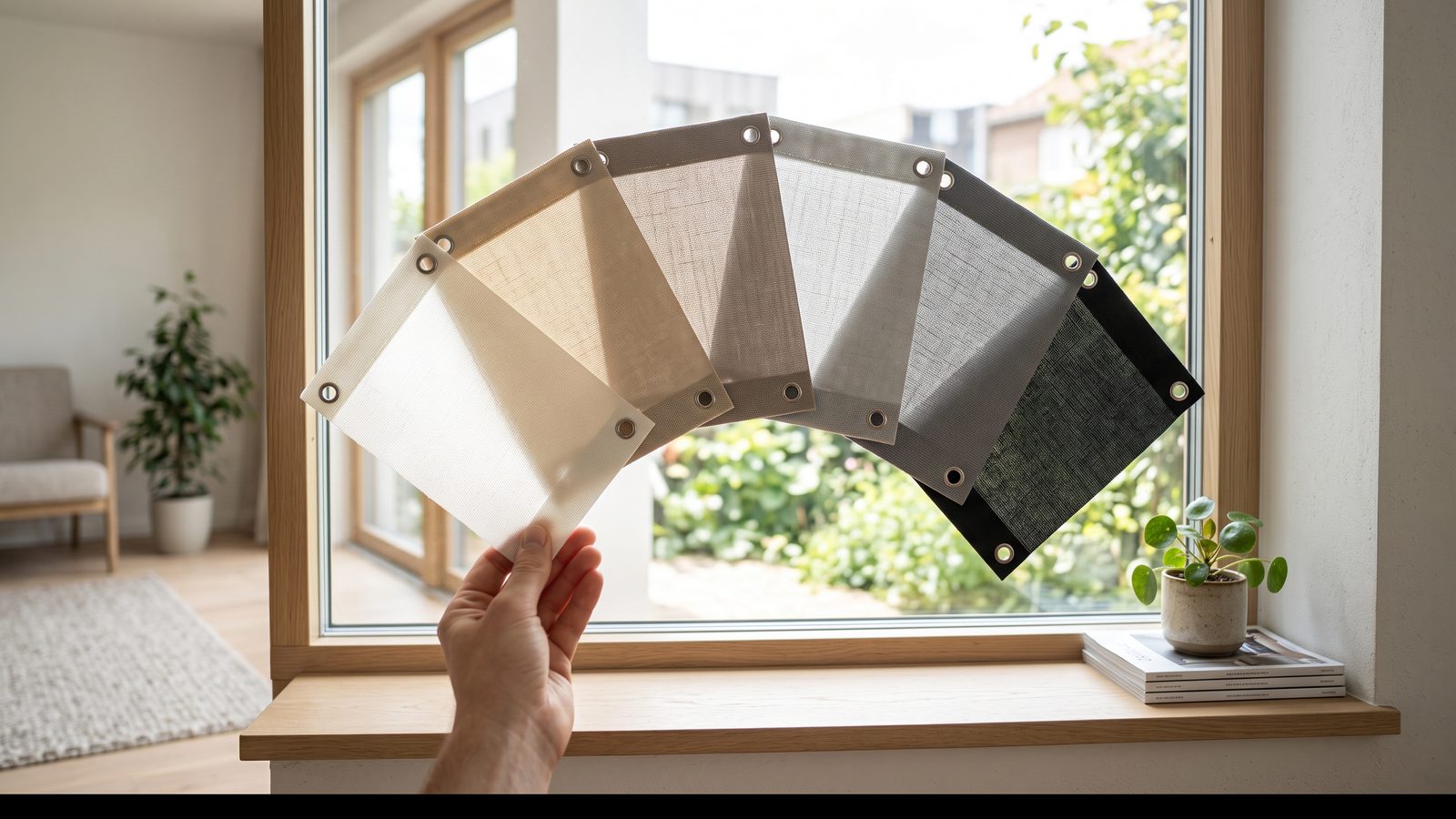
What Each Blind Colour Does
| Colour | Heat reflected | Outward view | Glare control | Shows dirt |
|---|---|---|---|---|
| White / oyster | Highest | Washed out | Weakest | Most |
| Beige / linen | High | Fair | Fair | Least |
| Mid grey | Moderate | Good | Good | Least |
| Charcoal / bronze | Lower | Sharpest | Strongest | Shows dust |
| Black | Lowest | Sharpest | Strongest | Shows dust badly |
The Dark-Fabric Paradox
Dark fabric gives the best outward view and the strongest glare control, because your eye looks through dark yarn towards a bright scene without the fabric scattering light back at you. But dark fabric absorbs solar energy instead of reflecting it, so it performs worse thermally. Both facts are true at once, which is why dual-sided fabric exists: pale reflective backing to the glass, dark face to the room.
Which Rooms Push Which Way
- West-facing living rooms — heat is the enemy. Pale backing, mid-to-dark face.
- Home offices — screen glare is the enemy. Dark face, accept slightly more heat.
- Bedrooms — blockout, so the face colour is purely aesthetic.
- Kitchens — mid tones. White shows cooking grease within months.
- Coastal rooms — mid tones. Salt residue is visible on both extremes.
What Actually Shows Marks
Both ends of the scale are unforgiving and for opposite reasons: white shows grease, insect marks and water spotting, while black and charcoal show dust and lint. Mid greys, beiges and taupes hide both, which is why they dominate rental and guest properties — see blinds for guest houses.
Matching Across a House
Blinds read from outside as a set. Keeping one fabric colour visible from the street, and varying only the room-side face, gives a coherent facade while letting each room have what it needs. It also means a replacement years later still matches.
Frequently Asked Questions
Are white blinds better for keeping heat out?
Yes, on the side facing the glass. Pale surfaces reflect solar energy; dark surfaces absorb it and re-radiate part of it into the room.
Do dark blinds make a room darker?
Not necessarily. A dark sunscreen and a pale sunscreen at the same openness let similar amounts of light through — the dark one just scatters less of it, so the room reads as crisper rather than dimmer.
What blind colour shows the least dirt?
Mid greys, beiges and taupes. White shows grease and water marks, and black shows dust.
Colour matters most on a plain fabric, where there is no grain or slat pattern to carry the eye — which is why the decision bites hardest on roller blinds Cape Town. On timber the finish does more work than the colour: see wooden blinds Cape Town for basswood, fauxwood and white.
Get a Free Measure & Quote in Cape Town
Window Blinds Cape Town measures, manufactures and installs across the metro. Call 081 411 8471 for a free on-site measure and quote, or browse the other blind guides.